
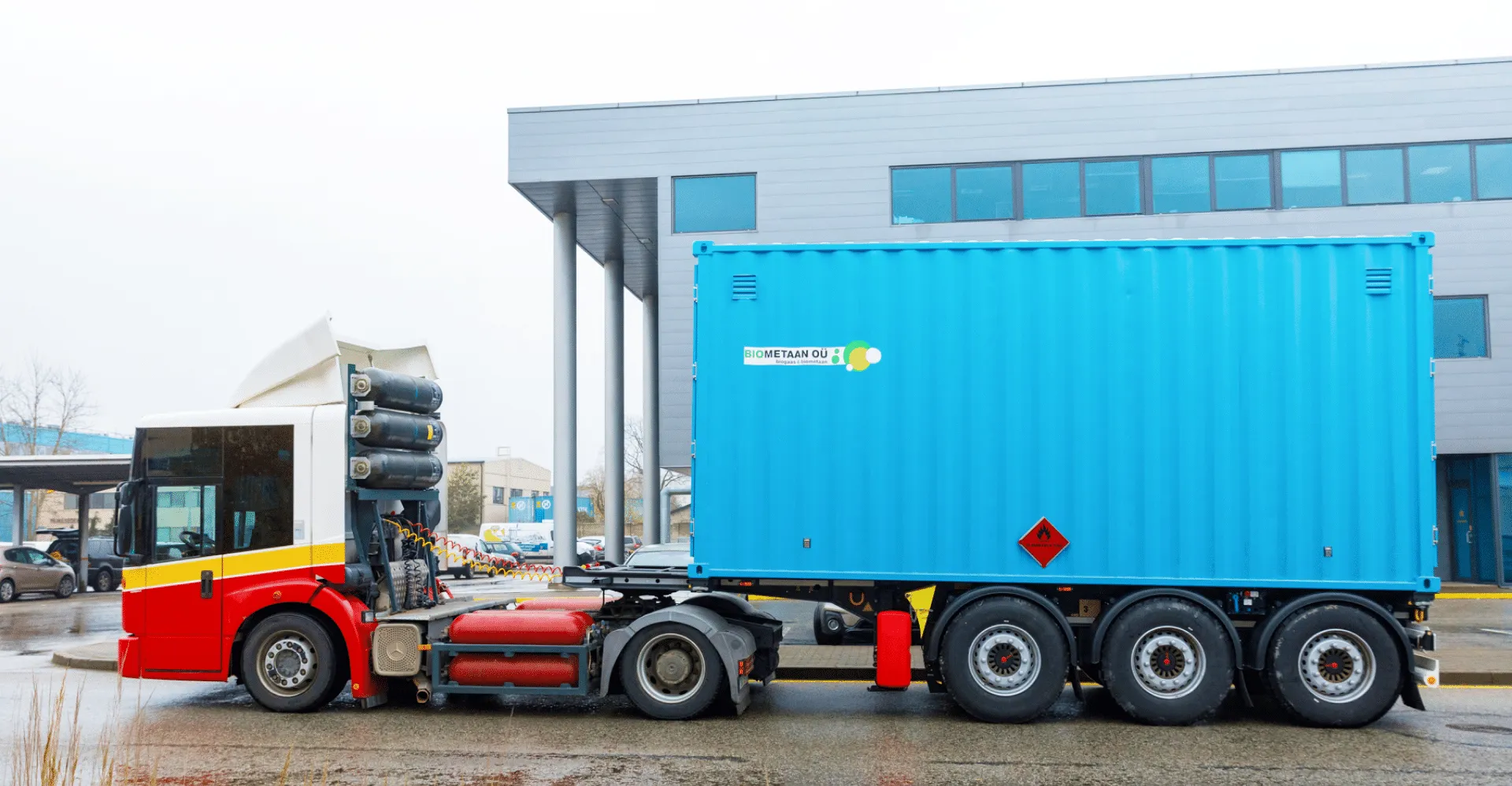
Gaznet has been engineering gas-system applications since 2005, and our container range reflects what we’ve learned from the field: the cylinder programme is the load-bearing decision in a project; everything else flows from it. We work with UMOE Advanced Composites as our cylinder supplier and represent UAC across Eastern Europe, the Baltics, and the Balkans.
Why composite Type-IV
The cylinder behind every container in the Gaznet range is a Type-IV composite vessel: a polymer liner over-wrapped with high-strength fibreglass and epoxy, finished with stainless-steel end fittings. The construction means three things that matter operationally:
- No corrosion. Plastic liner + composite shell + stainless fittings — there is no internal steel surface for water vapour or H₂S to attack, and no galvanic couple to manage.
- Up to 70% lighter than steel. That weight reduction shows up directly in payload, fuel cost, and chassis specification. For mobile applications it’s the difference between two trips and one.
- Long fatigue life. UAC vessels are tested past the requirements of EN 12245 — burst, impact, fire, fatigue — and certified for ADR road transport, RID rail, and PED stationary service.
Quality standards
Every cylinder we ship is approved against EN 12245, with ADR PED/TPED clearance for transport and the corresponding RID approvals for rail. The certification file is part of the delivery, not an afterthought — operators inheriting our containers can prove compliance to a roadside inspection without extra paperwork chasing.
Cost picture
Type-IV composite competes on price with steel cylinder containers, even before lifecycle considerations. Add the corrosion-free property (less frequent NDT, lower planned maintenance), the longer service life (UAC vessels last roughly 3× as long as average steel equivalents), and the inspection economics (composites need fewer destructive tests over a working life), and the total cost of ownership tilts hard toward composite — particularly for mobile applications where weight directly drives fuel cost.
Safety pedigree
Pressure-vessel safety is a stack of independent layers: cylinder design, type approval, factory acceptance tests, in-service inspection, pressure-relief devices, frame design, and operator training. Our containers ship with all the relevant test reports, fire and burst data, and TPRD specifications. The safety factor on working pressure sits at 3.2–3.6×, well above the regulatory floor.
Where MEGC fits
For larger volumes, the MEGC (Multi Element Gas Container) bundles multiple cylinders in one ISO frame for road, rail, or sea transport. It’s the workhorse of off-pipeline distribution — connecting biomethane producers to grid-injection points, fueling stations to vehicle fleets, hydrogen production to industrial users.
Biogas and BIO-CNG
Biomethane is chemically the same as fossil CNG once it’s upgraded — at least 95% methane after water scrubbing, PSA, or membrane separation. Once upgraded it goes through the same containers, the same compressors, the same dispensers as fossil CNG. That continuity is what makes biomethane easy to integrate into existing fleet and industrial infrastructure.
Vehicle conversion
Existing petrol vehicles can be converted to CNG or dual-fuel operation in authorised workshops — installation of a CNG cylinder, the injection system, and the supporting electronics. Factory-built CNG vehicles are a cleaner solution where the option exists, since the cylinder integrates into the chassis rather than the boot. Either route benefits from the higher autoignition temperature of CNG compared to liquid fuels, which is one of the reasons operators take the conversion seriously.
If you’re scoping a project, the product range lays out the per-application options; a scoping conversation can refine the spec for your specific use case.
Related reading
Energy
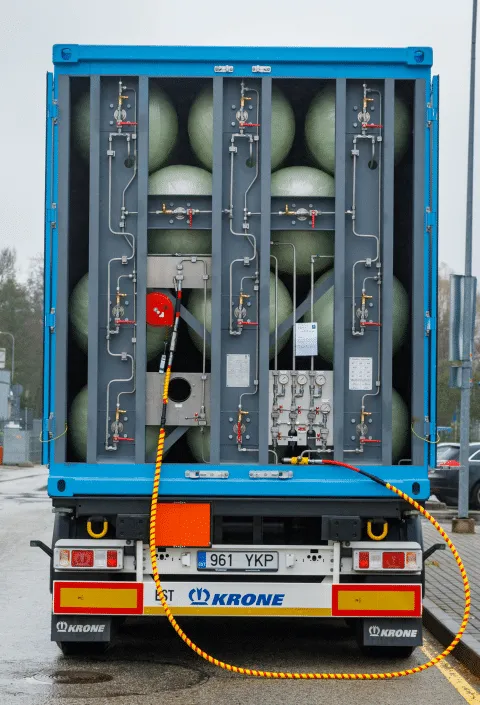
CNG storage in renewable biogas distribution
How CNG storage and transport infrastructure makes biogas viable as a renewable energy source — from collection at the digester to delivery at the user.
Energy
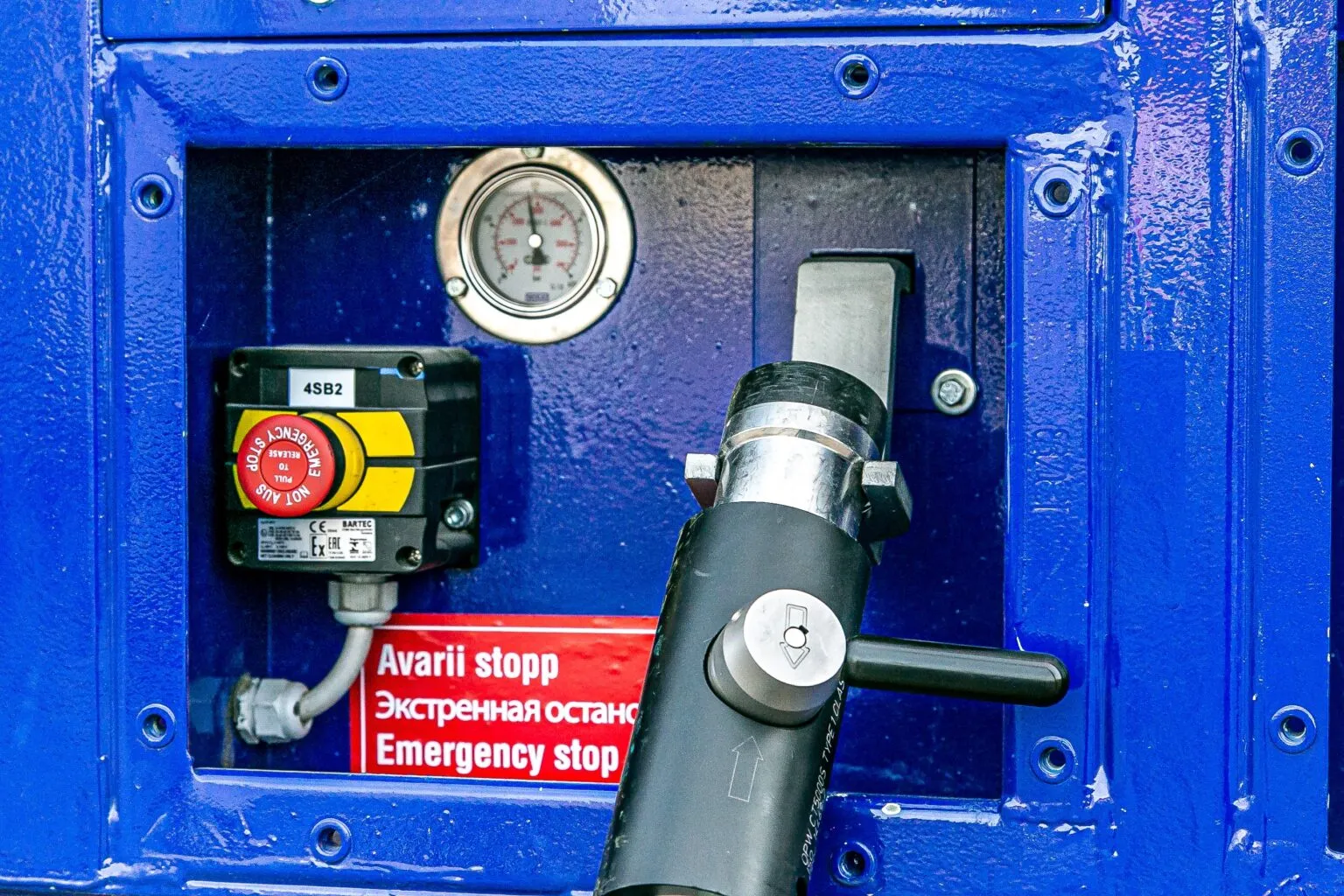
CNG and hydrogen storage cylinder types
The five cylinder types used for CNG and hydrogen, from Type 1 steel to Type 5 all-composite, with weight, cost, and application fit.
Energy
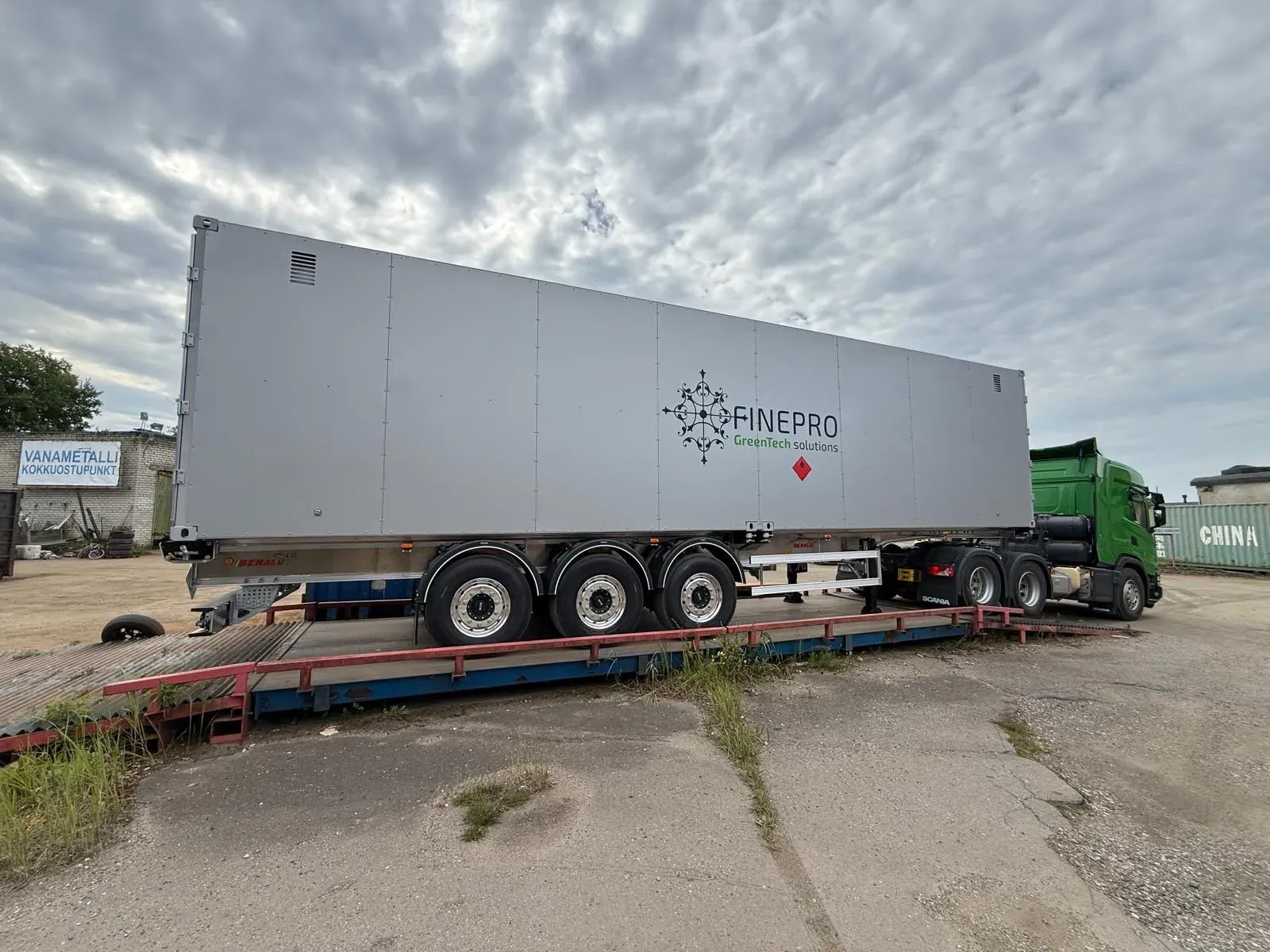
20 ft vs 40 ft MEGC: where the money actually is
The 40 ft MEGC is not cheaper per Nm³ to buy — cylinders are 75% of the cost and scale linearly. Its entire advantage is in the truck. Here is the break-even.
Talk to our engineers
From CNG and biomethane to hydrogen — we'll scope your project and reply within one working day.