
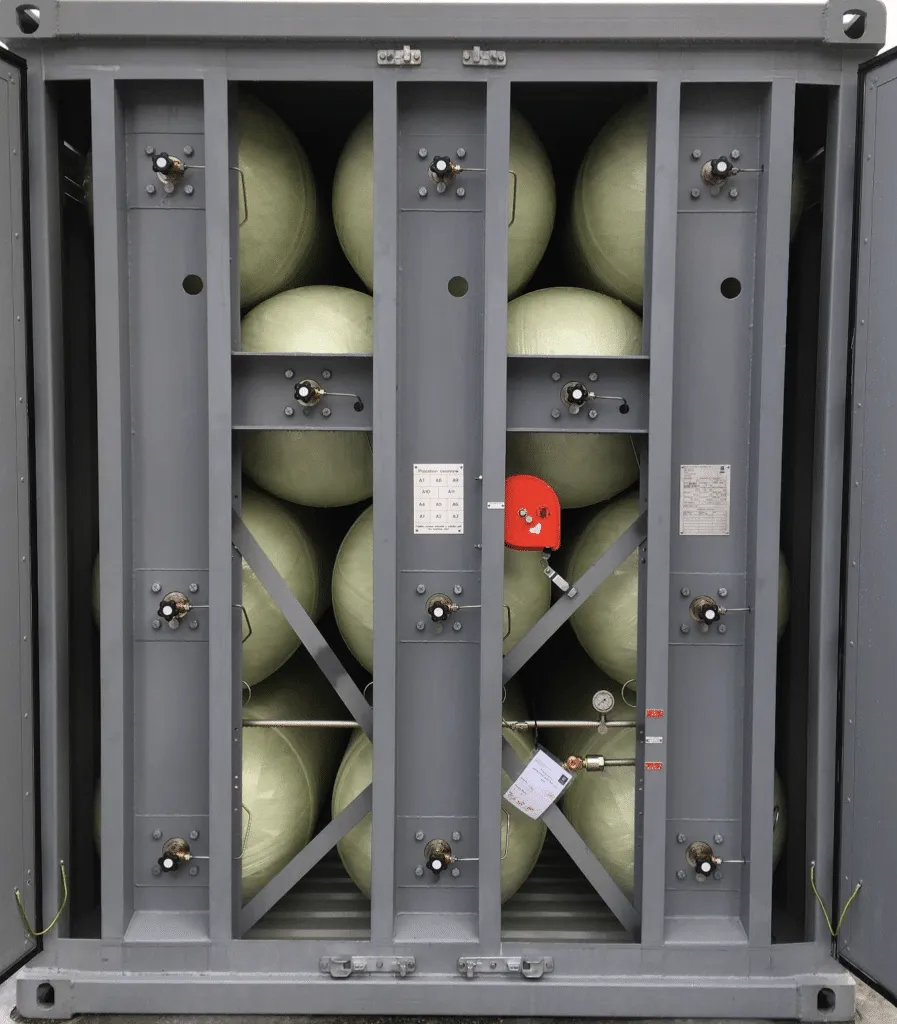
Hydrogen is becoming a real fuel — for heavy-duty mobility, for industrial process heat, for backup power, and for export trade. The production side is increasingly well-served by electrolyser fleets and steam-methane reforming with capture. The harder, less-discussed engineering problem is storage and transportation: hydrogen is the smallest molecule on the periodic table, it leaks past gaskets that hold methane fine, it embrittles steel, and it has a lousy volumetric energy density at atmospheric pressure. Getting it from production to use is mostly an exercise in choosing the right pressure vessel and the right route.
Gaseous vs liquid
Two fundamental storage forms dominate. Compressed gaseous hydrogen — typically at 350 bar for commercial vehicles, 700 bar for passenger vehicles, and intermediate pressures for industrial buffers — uses pressure vessels broadly similar to the CNG cylinder family but with hydrogen-specific design and material constraints. Liquid hydrogen is far denser per unit volume but has to be held cryogenically (below −253 °C) in vacuum-insulated tanks, with a small ongoing boil-off loss. Compressed gas is the dominant option for mobile applications and small-to-medium industrial use; liquid is reserved for high-volume export logistics or aerospace-grade applications.
Hydrogen-rated cylinder types
Type-IV composite vessels with polymer liners dominate hydrogen storage for the same reasons they dominate high-end CNG: lightweight, corrosion-free, and they don’t suffer hydrogen embrittlement the way some metals do. Gaznet’s cylinder programme is built on UMOE Advanced Composite Type-IV vessels rated for hydrogen at the relevant pressure classes.
Transportation options
For mobile and bulk applications, there are three practical routes:
- Tube-trailers — multi-cylinder ISO-frame assemblies, typically delivered by truck, that carry compressed hydrogen from production to user. The mainstay of medium-distance distribution today.
- MEGC containers — like tube-trailers but configured for road, rail, and sea on a standard ISO container footprint. Higher capacity per unit, and compatible with multi-modal shipping. The right choice for export trade and longer routes.
- Liquid tankers — cryogenic road tankers for liquid hydrogen, used where volume and distance justify the additional handling complexity.
Industrial-scale storage
For industrial users and fueling stations, the inventory typically lives in a buffer of stationary cylinders sized to the duty cycle. Composite Type-III or Type-IV cylinders dominate, with steel Type-1 or Type-2 banks where weight isn’t a binding constraint and cost discipline matters. The buffer is replenished by tube-trailer or MEGC deliveries on a schedule matched to consumption.
Safety considerations
Hydrogen has different safety properties than methane: a much wider flammable range in air (4–75%), a lower minimum ignition energy, and a higher flame speed. Real-world incident analysis shows that with proper engineering, hydrogen systems are not less safe than other fuels — but they require more attention to leak detection, ventilation, and ignition-source management. Type-IV composite vessels are tested for hydrogen-specific failure modes including embrittlement and cycle fatigue, with dedicated approval routes (ISO 19881, ECE R134) layered onto the general pressure-vessel certifications.
Sustainability and lifecycle
Composite cylinders are recyclable at end of life — composite scrap can be repurposed, and the carbon-fibre content is increasingly being captured into secondary applications. The environmental story for hydrogen as a whole depends on how the hydrogen is produced (green electrolysis, blue with capture, or grey from natural gas without capture); the storage and transport piece is broadly fuel-agnostic.
Where Gaznet fits
We design and supply the cylinders, the racks, and the MEGC/tube-trailer configurations that move hydrogen from where it’s produced to where it’s used. Our product range covers hydrogen-rated transport containers and stationary storage. If you’re scoping a hydrogen project, a scoping conversation gets you a numbers-backed configuration in the first hour.
Related reading
Energy
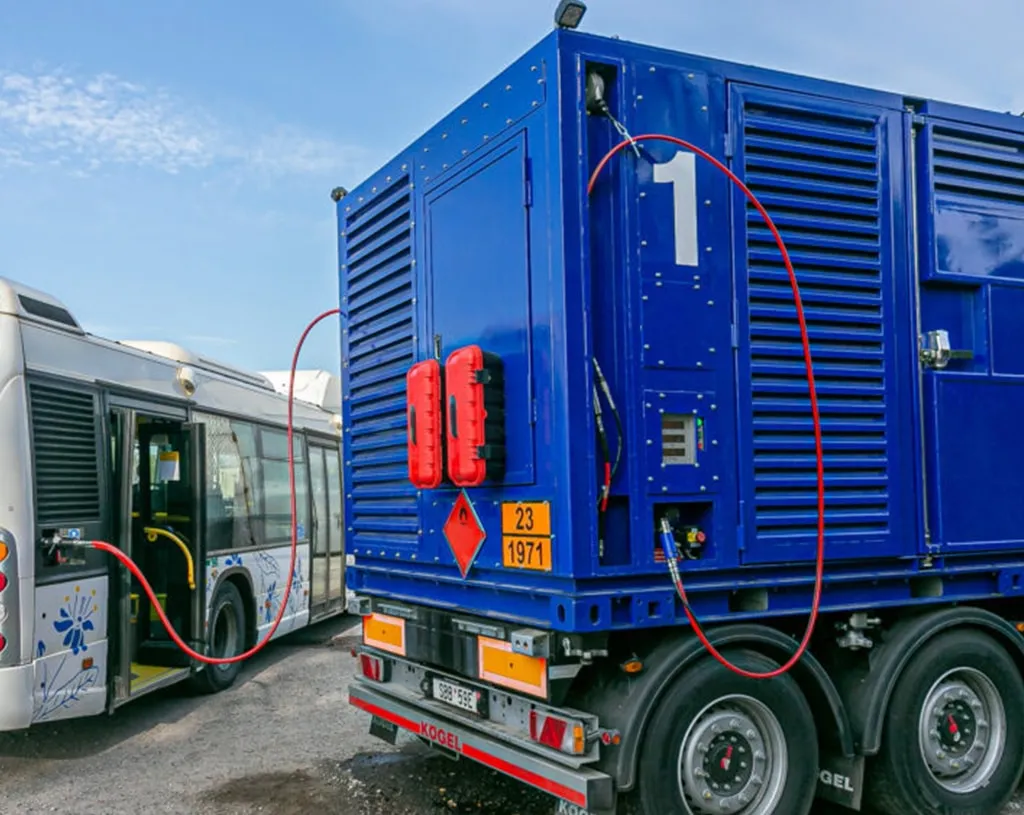
CNG daughter station for off-pipeline gas supply
What a CNG daughter station is, why operators choose it over fixed pipelines, and how MEGC and tube-trailer logistics support remote refuelling.
Energy
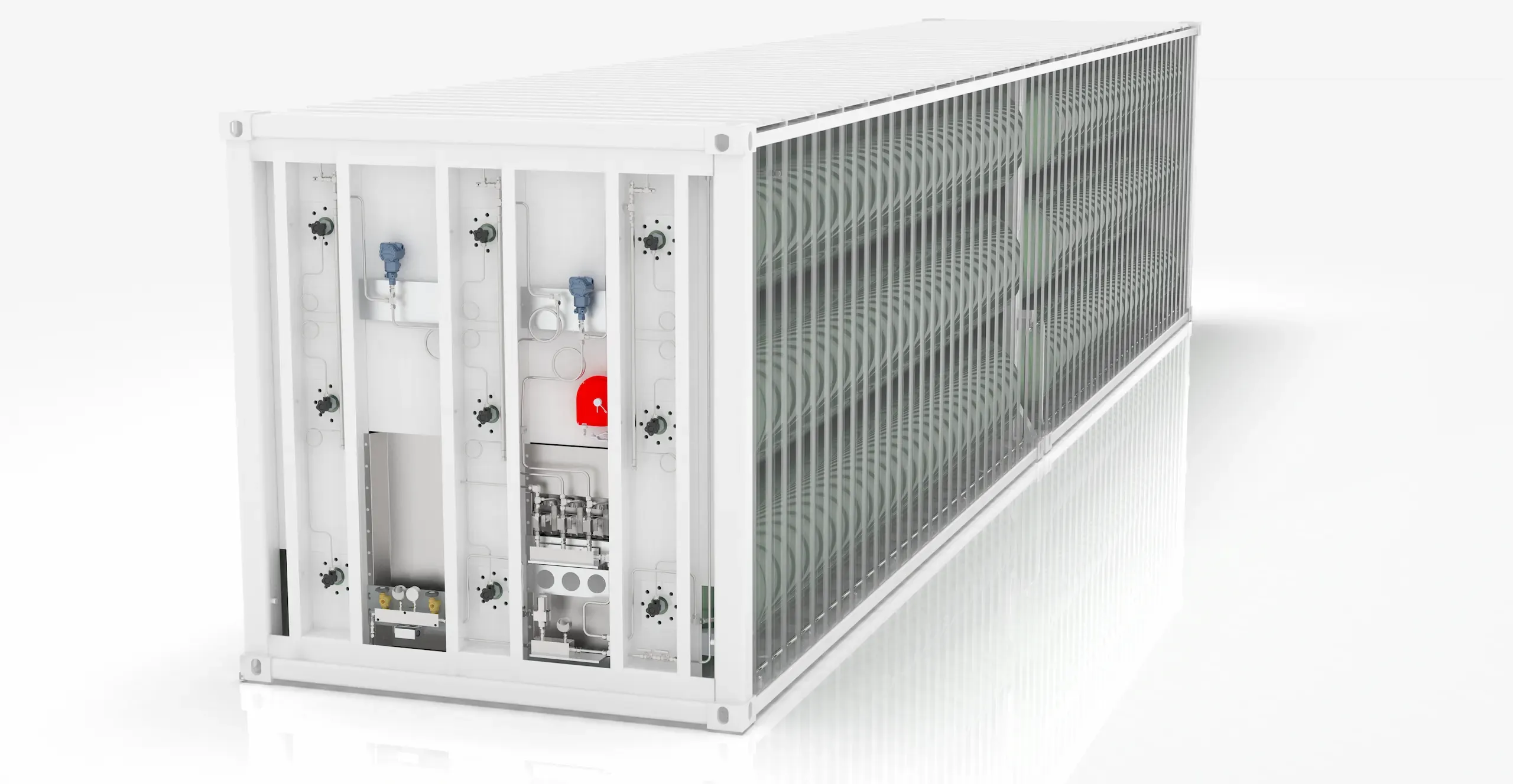
MEGC: the Multi Element Gas Container
What an MEGC is, how Multi Element Gas Containers transport CNG and hydrogen across road, rail, and sea, and why operators choose them.
Energy
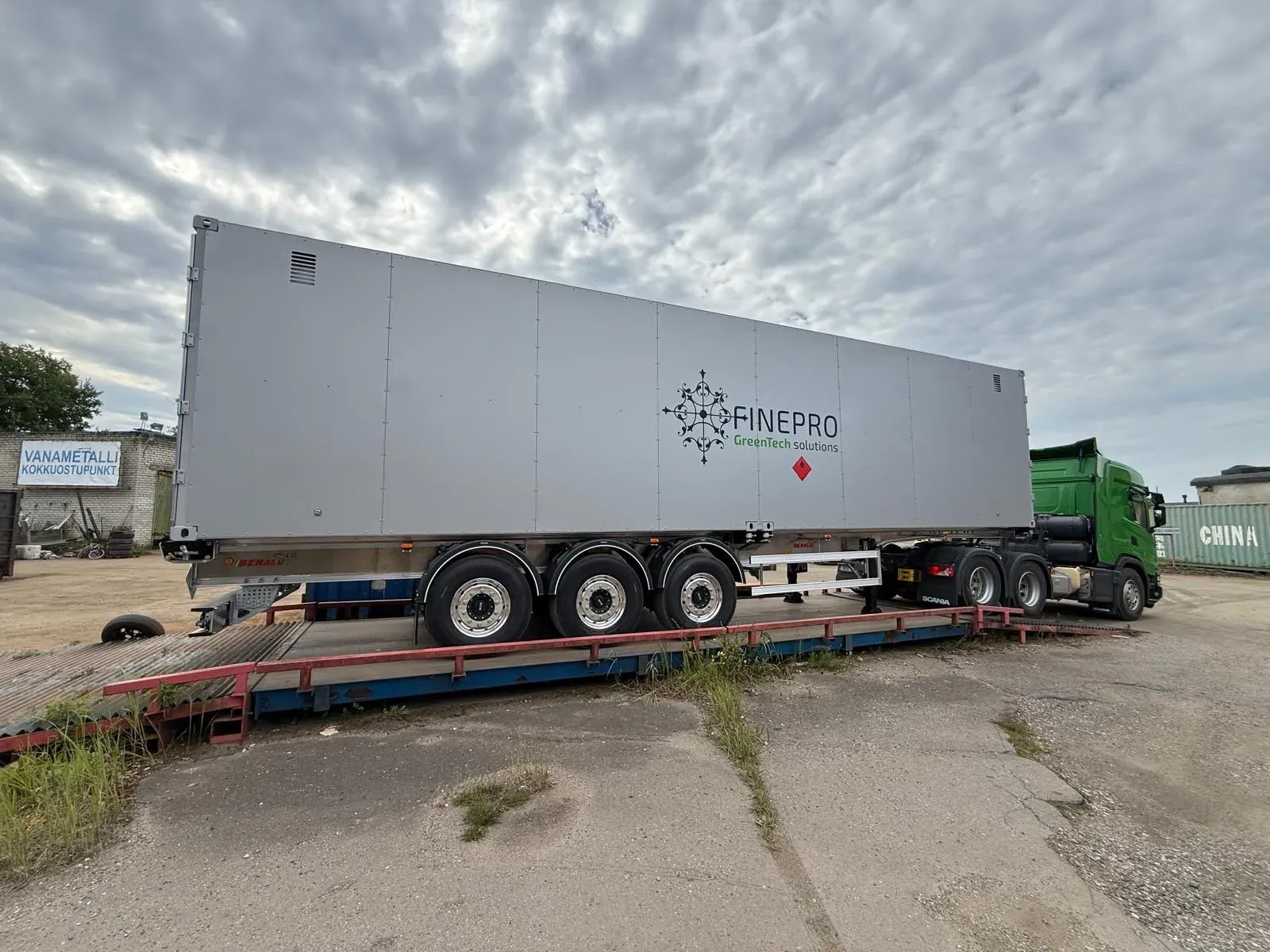
20 ft vs 40 ft MEGC: where the money actually is
The 40 ft MEGC is not cheaper per Nm³ to buy — cylinders are 75% of the cost and scale linearly. Its entire advantage is in the truck. Here is the break-even.
Talk to our engineers
From CNG and biomethane to hydrogen — we'll scope your project and reply within one working day.