
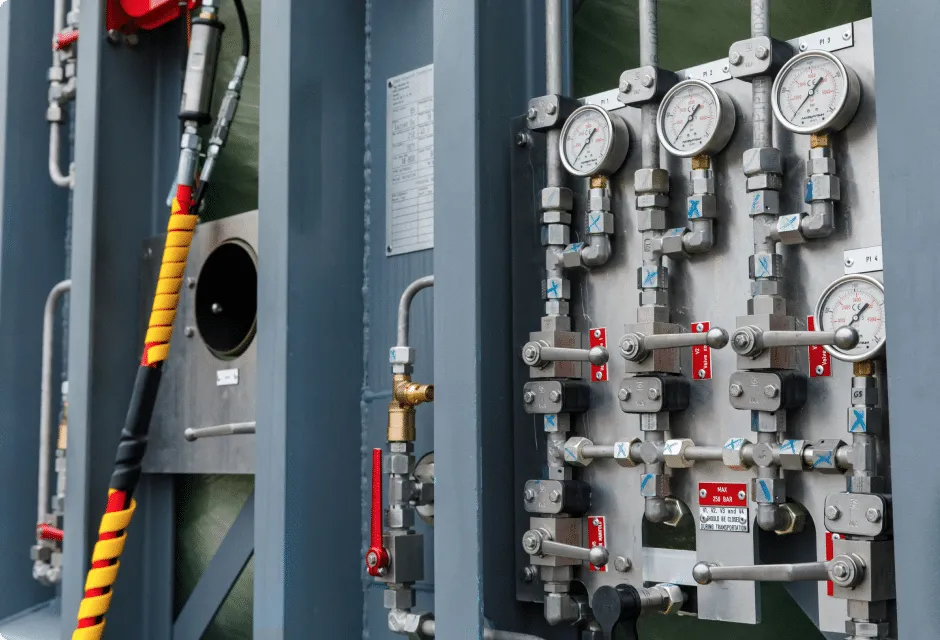
Most CNG cylinder incidents don’t happen during normal use — they happen during handling and shipping. Static storage is well-controlled; what changes when a cylinder is moved is the load case (vibration, impact risk) and the loss of the protective enclosure that surrounds it on the rack. Safe transport comes down to a small set of disciplines applied consistently every time the cylinder leaves its frame.
Inspect before, inspect during
Visual inspection at hand-over and again at delivery catches most transport-related damage early. Look for dents, gouges, corrosion, cracked composite layers, missing or damaged labels, and the condition of the pressure-relief device. Any cylinder showing damage that could affect the pressure boundary should be quarantined until a competent technician clears it. The cost of pulling one cylinder out of service for a re-qualification is trivially smaller than the cost of an in-transit failure.
Secure packaging
Cylinders should travel in purpose-built packaging or fixtures — racks designed for the cylinder size and pressure rating, with valve caps in place and tie-downs that load against the cylinder body, not the valve. Loose cylinders rolling in a vehicle are an obvious hazard; less obvious is the slow-cycle abrasion damage that happens when cylinders rub against each other or against ill-fitting straps over hundreds of road kilometres.
Labelling and documentation
ADR (and equivalent regimes for rail and sea) require specific markings: UN number, hazard label, orientation, pressure, gas identification. Compliance also means a bill of lading or transport document that lists the cargo, the consignor, and the emergency response contact. Drivers should carry the relevant ADR training certification for the gases on board. Skipping any of this turns a routine inspection into a costly compliance event.
Ventilation and confined spaces
CNG is lighter than air; in a leak, it rises. That makes a closed cargo space a poor place for a cylinder — gas pockets at the roof become a problem fast. Open trailers, ventilated frames, and the right rack design all help. Don’t store filled cylinders in confined or unventilated spaces, and don’t leave a vehicle with cylinders idling in a closed garage.
The short version
Inspect the cylinder, secure it properly, label and document the consignment, and avoid confined unventilated spaces. None of this is hard; what fails is the consistency. Fleet operators who run Gaznet’s MEGC and tube-trailer solutions get the package — the cylinders, the rack, the documentation, and the training pointers — built around exactly these disciplines.
Related reading

Energy
CNG cylinder certification and testing
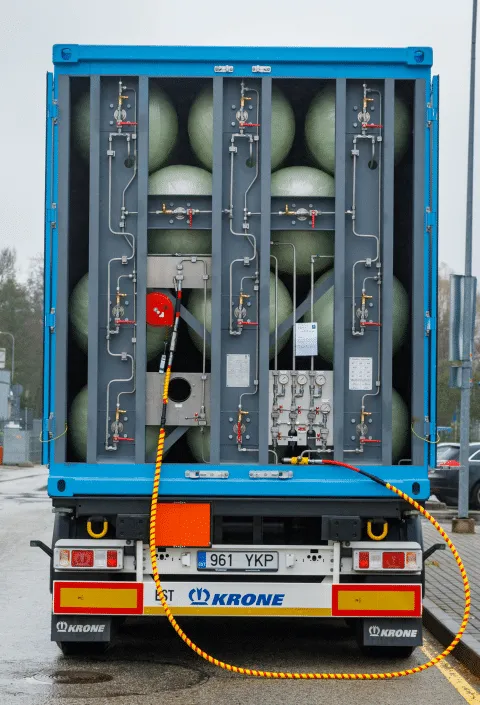
How CNG cylinder certification works in practice, from design evaluation and production testing to type approval and periodic re-qualification.
Energy
CNG storage in renewable biogas distribution
How CNG storage and transport infrastructure makes biogas viable as a renewable energy source — from collection at the digester to delivery at the user.
Energy
20 ft vs 40 ft MEGC: where the money actually is
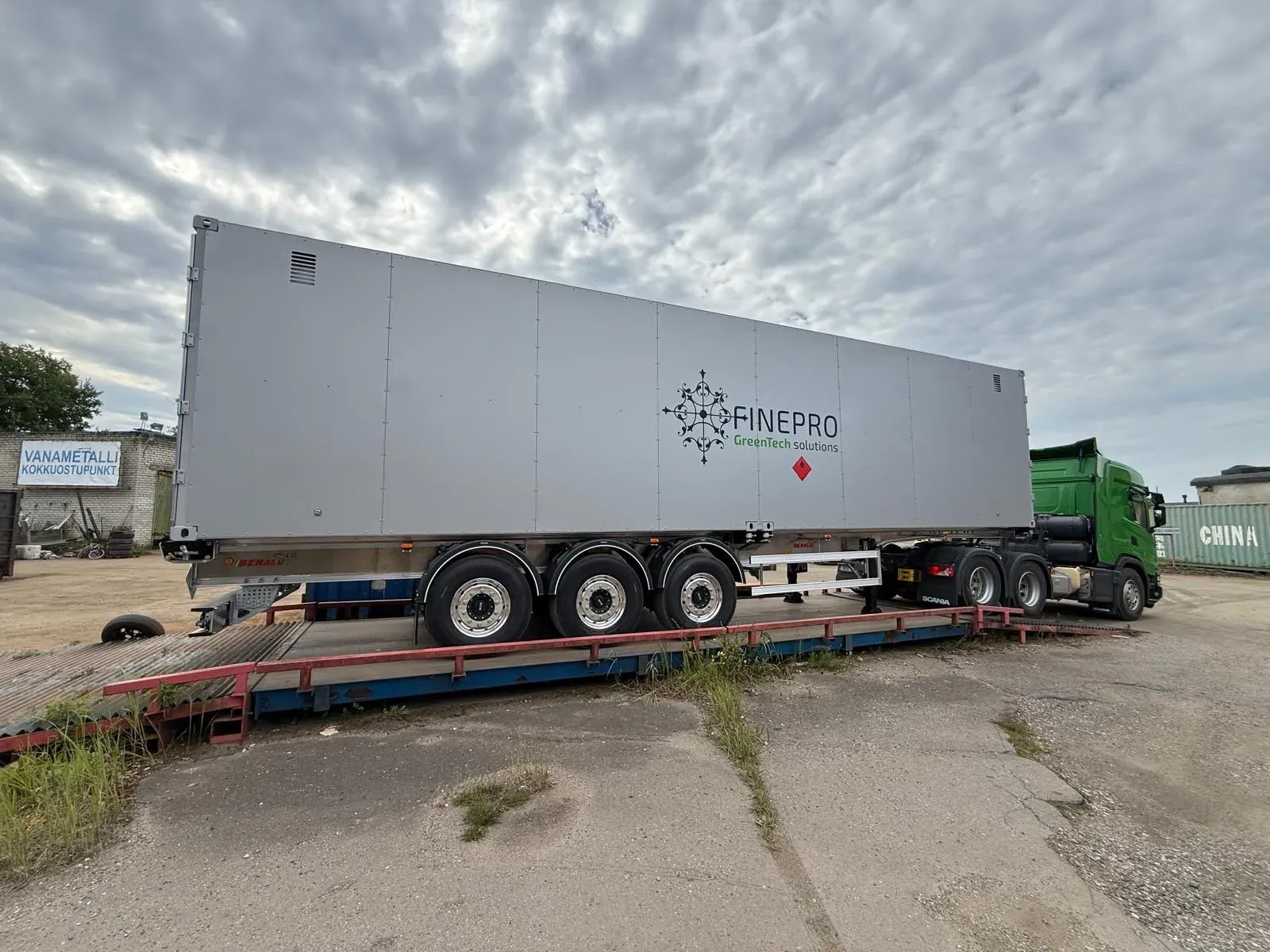
The 40 ft MEGC is not cheaper per Nm³ to buy — cylinders are 75% of the cost and scale linearly. Its entire advantage is in the truck. Here is the break-even.
Talk to our engineers
From CNG and biomethane to hydrogen — we'll scope your project and reply within one working day.